BIOMORPHISM
Biomorphism, an art movement that emerged in the 20th century, is characterized by abstract, organic forms that are inspired by elements of nature, particularly biological shapes and structures. The term "biomorphism" itself is derived from the Greek words "bios," meaning life, and "morphe," meaning form. Artists associated with this movement often sought to capture the essence of living organisms, such as plants, animals, and microorganisms, in their works.
Central to biomorphic art is the use of organic shapes, featuring flowing, curvilinear lines that evoke the fluidity of nature. These forms may be abstracted, distorted, or exaggerated to convey a dynamic sense of life. Natural patterns, such as the symmetry found in leaves or the spirals of shells, are integral to biomorphic art, contributing to the creation of compositions that resonate with organic aesthetics.
The movement shares connections with Surrealism, emphasizing the subconscious and fantastical elements. Biomorphism allows artists to explore the boundaries between abstraction and representation, often resulting in dreamlike and imaginative compositions.
Biomorphic art manifests across various mediums, including painting, sculpture, architecture, and design. Artists employ a diverse range of materials to bring their visions of organic beauty to life.
Prominent figures associated with biomorphism include Jean Arp, Joan Miró, Yves Tanguy, and Henry Moore. Their contributions reflect a blending of the artificial and the natural, creating a visual language that blurs the distinctions between the two.
Today, biomorphism continues to influence contemporary art, as artists draw inspiration from the intricacies and allure of the natural world, translating these influences into evocative and thought-provoking creations.
1 resultados
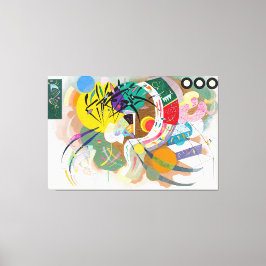
LIENZO KANDINSKY - CURVA DOMINANTE - 1936 -
Precio 378,00 €
Otras colecciones de The Marvelous Realm of Fine Art que te pueden interesar