BAUHAUS
The Bauhaus, founded by Walter Gropius in 1919, stands as a groundbreaking German art school that redefined artistic expression beyond traditional confines. Lasting until 1933, the movement aimed to seamlessly integrate fine arts, crafts, and technology, emphasizing the amalgamation of artistic creativity with practical functionality.
Two prominent artists associated with the Bauhaus, Wassily Kandinsky and Paul Klee, played pivotal roles in shaping the movement's artistic direction.
Wassily Kandinsky, a key figure at the Bauhaus delved into abstract art and color theory. His emotionally charged compositions became emblematic of the Bauhaus spirit, characterized by dynamic shapes and a vibrant palette. Kandinsky's work not only reflected the experimentation intrinsic to the Bauhaus but also contributed to a broader exploration of the emotional impact of color in art.
Another figure within the Bauhaus movement, Paul Klee, a Swiss-German painter and teacher at the Bauhaus school, brought a whimsical and abstract quality to the movement. His art, marked by intricate patterns and imaginative forms, significantly influenced the school's artistic direction. Klee's unique approach to shapes and compositions contributed to the development of a distinct Bauhaus aesthetic.
Despite political challenges leading to its closure in 1933, the Bauhaus has left an enduring mark on the art world. The legacy of artists like Kandinsky and Klee, who redefined the boundaries of artistic expression, continues to resonate in modern art, design, and architecture. Their contributions have not only enriched the artistic landscape but have also inspired generations to push the limits of creativity and innovation.
4 resultados
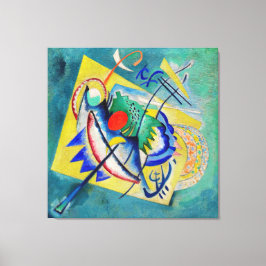
Lienzo KANDINSKY - OVAL ROJO - 1920 - Bauhaus -
Precio 266,00 €
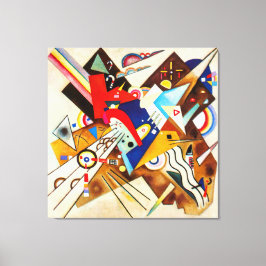
Lienzo KANDINSKY - ESQUINOS ACENTUADOS (1922) - Bauhaus -
Precio 266,00 €
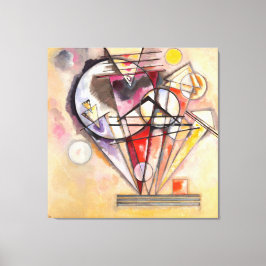
Lienzo KANDINSKY - SOBRE LOS PUNTOS - 1928 - Bauhaus -
Precio 266,00 €
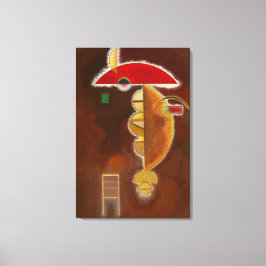
Lienzo KANDINSKY - DEPRIMIDO (Gedrückt) - 1929 - Bauhaus
Precio 174,00 €
Otras colecciones de The Marvelous Realm of Fine Art que te pueden interesar